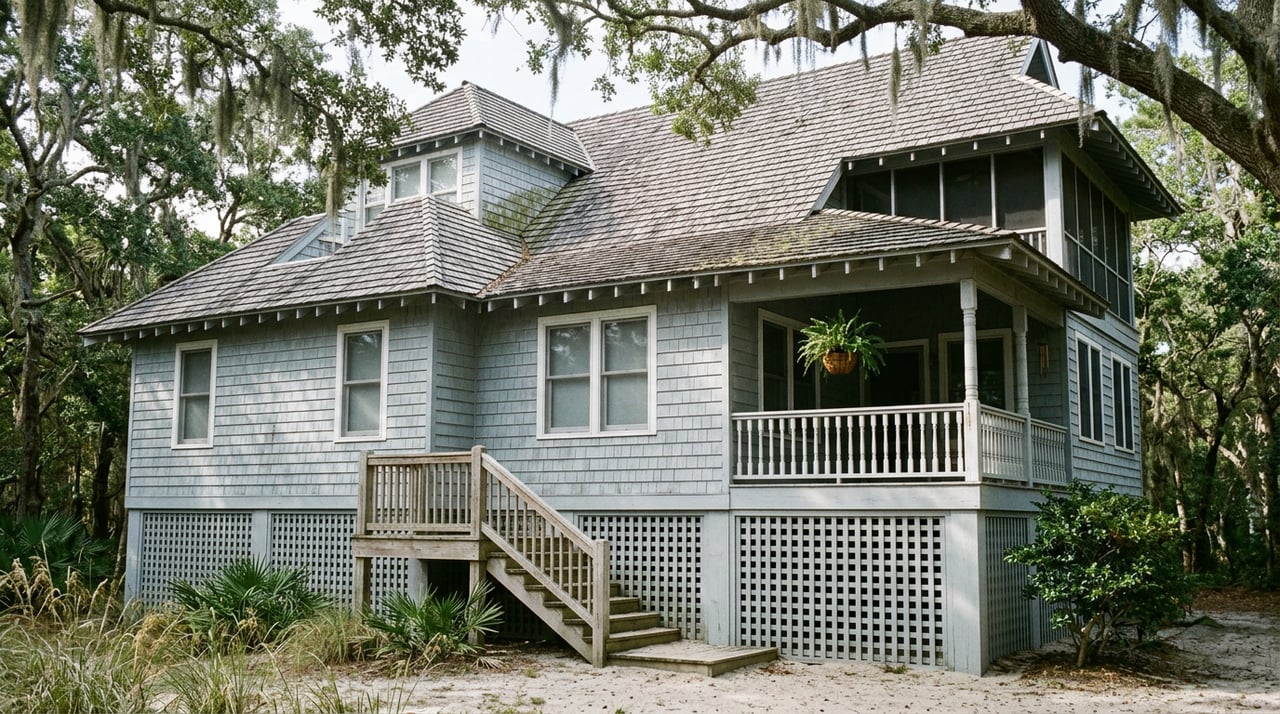
Why a Single Insurance Quote Never Covers a Bald Head Island Closing
September 24, 2026
September 24, 2026
A buyer under contract may receive an insurance quote that looks comfortably inside the budget. But a quote covering fire, theft, and liability still leaves two questions: Where's the wind and hail policy? Where's the flood policy?
On a barrier island in Brunswick County, one insurance quote is never enough to cover a closing. It is only the first of three policies.
Most buyers assume they're shopping for homeowners insurance the same way they would for a house in Raleigh or Charlotte. On Bald Head Island, the more useful word is dwelling, because most properties here aren't anyone's primary residence. They're second homes, rental properties, or investment purchases, and lenders and insurers treat those differently than a primary homeowners policy.
That distinction matters right now for a specific reason. According to Live Insurance News, North Carolina Insurance Commissioner Mike Causey and the North Carolina Rate Bureau reached a settlement this year that raises dwelling insurance rates statewide, separate from standard homeowners rates. The Rate Bureau had originally asked for as much as 68 percent in increases over two years. The approved settlement is smaller but still real: a 5 percent increase effective October 1, 2026, followed by another 5 percent in October 2027. On a $400,000 dwelling policy at the statewide average of roughly $2,071 a year, the first increase adds about $104 annually, or a little over $8 a month.
That number sounds small until you remember who actually pays it. A primary-residence market absorbs a dwelling-rate change unevenly, since most owners hold homeowners policies instead. On an island where a majority of properties are vacation homes, rentals, or investment holdings, this particular rate action lands on nearly everyone.
The dwelling policy is only the first name on the bill. According to Property People Law, Bald Head Island sits inside Brunswick County's coastal beach territory. Bridgeway Insurance explains that private insurers routinely exclude wind and hail damage from that first policy entirely. Coverage for wind and hail comes instead through the North Carolina Insurance Underwriting Association, known on the coast as the Beach Plan, a state-created pool that exists specifically because the private market won't carry that risk alone here.
Flood is a third, separate contract again. Wind can knock a hole in your roof. But storm surge that comes up from the marsh or the sound is a flood claim.
| Policy | Covers | Does not cover |
|---|---|---|
| Dwelling or homeowners | Fire, theft, liability, most non-weather perils | Wind, hail, flood |
| NCIUA Beach Plan | Wind and hail damage to the structure | Flood, fire, theft, liability |
| NFIP or private flood | Storm surge, marsh and sound flooding | Wind damage, fire, theft |
Three carriers means three deductibles, three claims processes, and after a storm, three adjusters inspecting the same roof and sometimes disagreeing about which policy owes what.
According to Harbor Insurance, Beach Plan deductibles aren't flat dollar amounts. They're a percentage of the dwelling's insured value. A $600,000 dwelling with a 2 percent deductible carries a $12,000 out-of-pocket obligation before the Beach Plan pays a single dollar toward wind or hail repairs. Move to a 4 or 5 percent deductible, which isn't unusual in higher-risk coastal locations, and that number climbs to $24,000 or $30,000.
None of that figure touches flood repairs, which run through NFIP separately, or the deductible on the base dwelling policy for whatever damage that first carrier accepts responsibility for. Buyers who compare a listing's asking price against a single insurance estimate are often comparing against roughly a third of the real annual and post-storm cost picture.
For anyone closing on Bald Head Island in the next several weeks, the timing of the new dwelling rate increase is worth sitting with. It takes effect October 1, 2026, which means a policy quoted in September at the old rate and bound in October may not reflect what actually gets billed. Combined with separate NCIUA rate filings that have already pushed Beach Plan premiums higher in both 2024 and 2025, the total cost of insuring a barrier island dwelling has been climbing on more than one front at once, and this fall adds another increase.
None of this is unique to any single closing. It's structural, and it's the reason a smart buyer treats insurance the way they'd treat a home inspection: something to start early, not something to check off the week before closing.
Flood insurance carries a mandatory 30-day waiting period before coverage takes effect, a rule set by the Village of Bald Head Island's flood protection guidance. Order flood coverage the week of closing, and you may be asking your closing attorney to push the date, not because paperwork moved slowly but because federal law says coverage simply isn't active yet.
The practical fix is sequencing. Buyers who request dwelling, Beach Plan, and flood quotes together, as soon as they go under contract rather than after appraisal, give themselves the full 30 days of runway the flood policy needs and a real number to bring to the lender instead of an estimate.
The Bald Head Association keeps an insurance resources page for exactly this reason, pointing members toward the North Carolina Department of Insurance's consumer guides and a recorded session the Association hosted with NCDOI staff alongside Chad Huneycutt and Brett Lascara of The Huneycutt Group, an agency whose agents specialize in coastal homeowners insurance and list a Bald Head Island office as a coming addition. The same BHA page lists Peril Property Adjusters as a local claims resource for owners navigating a post-storm dispute between carriers.
None of these organizations will tell you what to buy. What they will do, especially the NCDOI's own consumer guides, is walk through Beach Plan eligibility, flood zone determinations through the state's flood risk portal, and the specific language to look for in a dwelling policy before you sign it.
Where does wind and hail coverage come from? In Brunswick County's beach territory it usually isn't available through the standard dwelling policy. That's what the Beach Plan exists to provide.
What does flood risk look like on Bald Head Island? A large share of Bald Head Island's structures sit within an area the National Flood Insurance Program treats as subject to inundation risk.
Will the October 2026 increase show up on every renewal? It applies to dwelling forms broadly, but the actual percentage on any single policy depends on construction type, location, and the carrier's own filing. A local agent can tell you what it means for a specific address before you're locked into a closing date.
Insurance on a barrier island isn't a line item you check once. It's three separate relationships that need tending every year, and understanding how they fit together before you're under contract is worth more than any single quote. If you're weighing a purchase on Bald Head Island and want to talk through what a property's real carrying costs look like, Barbara Adams is glad to schedule a confidential consultation and walk through it with you, line by line, before you sign anything.
This article is general information, not legal, tax or financial advice. Consult a qualified professional about your situation.
I am committed to guiding you every step of the way—whether you're buying a home, selling a property, or securing a mortgage. Whatever your needs, I've got you covered.