The Painted Bunting Is Leaving Bald Head Island. The Birding Gets Better From Here.
October 1, 2026
October 1, 2026
If you've spent late summer watching a male painted bunting work a feeder near the maritime forest, blue head, red body, green back, you already know he won't be there much longer. The Bald Head Island Conservancy tracks this bird closely enough to band it, and its own migration research puts the species on the island from April through October at the outside. By the time the season turns, he's gone, headed for wintering grounds as far as Mexico and Cuba.
Most people treat that departure as the end of something. It isn't. The number that actually backs up Bald Head Island's reputation as a serious bird location doesn't get counted in July. It gets counted in January, by eight volunteers working before sunrise, long after the bunting and the crowds that came to photograph him have both left.
Bald Head Island carries a Global Important Bird Area designation from the National Audubon Society, one of only 720 such sites recognized worldwide. That's the fact most visitors hear secondhand, usually attached to whichever bird happens to be posing for a photo that week. It's rarely attached to the data that actually earned the designation.
That data comes from the Audubon Society's Christmas Bird Count, a continent-wide winter survey now in its 126th year. In its account of the January 4, 2026 count, the Bald Head Island Conservancy reports that its Director of Science, Beth Darrow, was part of a record-sized team of eight volunteer birders for the island's count. They started on the 6 a.m. ferry, worked through freezing pre-dawn temperatures, and by the end of the day had identified 83 species across the island's habitats.
Their first stop was Beach Access 39, out at the Shoals near Cape Fear Point, where they set up high-powered spotting scopes to pick out seabirds that don't reveal themselves to the naked eye. Black Scoters, Northern Gannets, Red-throated Loons, and Common Loons were only identifiable through the scope or by flight pattern alone. None of those are birds anyone puts on a postcard. All of them are part of the number that makes the IBA designation real rather than decorative.
A second route that same count worked through the Bald Head Island Club's golf course, made possible because the Club granted the Conservancy access to the mix of wooded, freshwater, and open habitat that a maintained golf course creates almost by accident. The lagoons held Blue-winged Teal and Hooded Mergansers. One thicket produced a cluster of songbirds that included a Red-breasted Nuthatch working alongside Ruby-crowned Kinglets and a Black-and-white Warbler, plus a Blue-headed Vireo. A juvenile Cooper's Hawk sat on a low branch near the 17th hole, apparently under the impression it was hidden.
Further out, the same team found:
None of this required a boat trip or a permit. It required walking the golf course perimeter and two beach accesses most people already pass on the way to somewhere else.
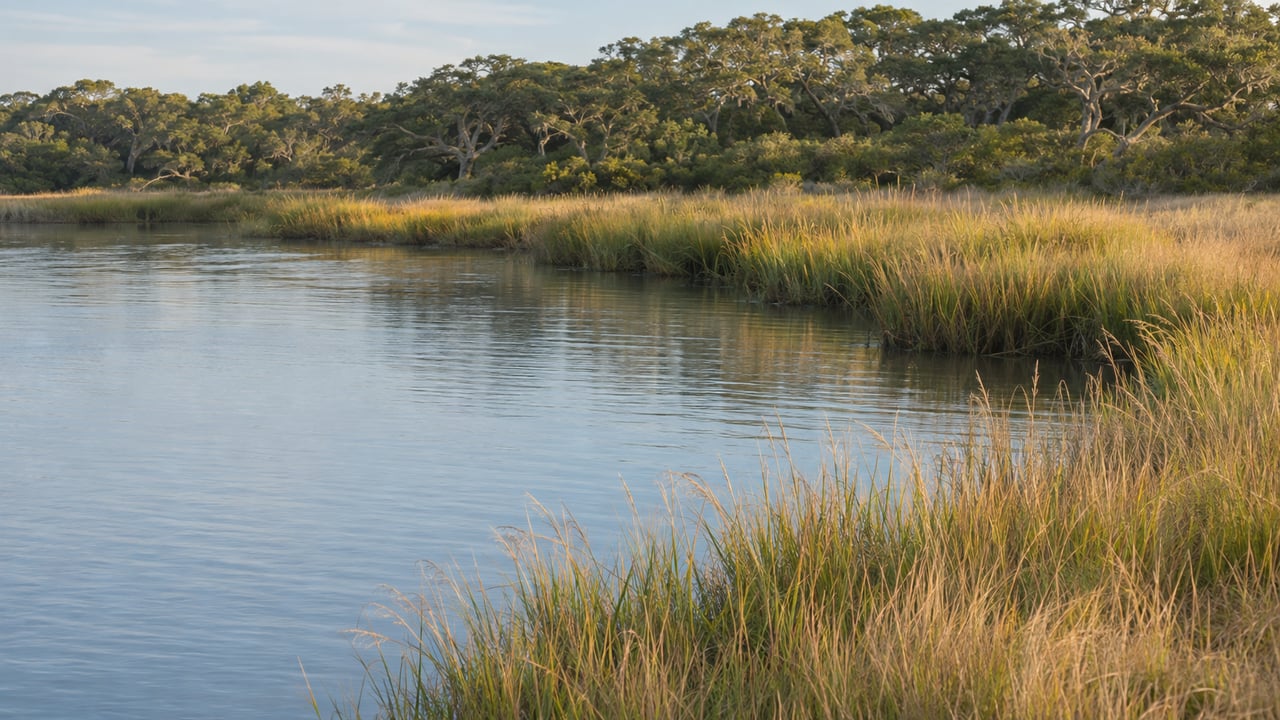
The beach gets the photographs, but the maritime forest is where the fall migration actually concentrates. According to the Bald Head Association's own materials on the Maritime Forest Preserve, migratory birds move through in fall in numbers that include catbirds, towhees, blue jays, and twenty-two separate species of warblers. That's not one signature bird working a feeder. That's a canopy doing volume, mostly unnoticed, mostly unphotographed, while the forest itself does the structural work barrier islands need: holding sand with root systems, building elevation, buffering wind before it reaches the interior.
The same stretch of coast plays a second role in that migration story. Bald Head Island is one of the stopover points used by the Rufa Red Knot, a shorebird that pauses along the North Carolina coast before making a run north to breed in the Canadian Arctic, then a return trip of more than 9,000 miles to wintering grounds at the southern tip of South America. A bird that travels that far can't afford a stopover site with nothing to offer. The presence of Red Knots working the shoreline is itself a small verification that the habitat is doing its job.
Not every piece of the Conservancy's calendar survives the shift out of summer. Educational programming slows considerably after Labor Day, largely because the fall calendar fills up with the Barrier Island Botanists program, a field trip that brings every sixth grader in Brunswick County, more than a thousand students a year, out to the island's three core ecosystems.
The Birding Tour is one of the pieces that keeps running anyway. It's still listed on the Conservancy's public program calendar this fall, meeting at the Conservancy's own grounds on Federal Road for a guided walk through beach, marsh, and maritime forest habitat that requires no prior birding experience and comes with binoculars and a field guide. It's a smaller program than the summer lineup of turtle walks and marsh explorer sessions, but it's one of the few that isn't built around a season that's already ending. If anything, it's built around the season that's just getting started.
The bird you were watching in August is not the bird you'll be looking for in January, and that's not a loss. It's the mechanism behind the designation itself. A Global Important Bird Area doesn't earn that status by hosting one charismatic species all year. It earns it by functioning as a stopover, a wintering ground, and a breeding site for an entire rotation of species that almost never overlap. The painted bunting's departure and the Christmas Bird Count's 83-species tally aren't two separate stories about the island. They're the same story, read at two different points in the calendar.
For anyone who already knows this island past the ferry schedule, that turnover is worth watching directly. A walk along the golf course perimeter, out to Access 11 or Access 1, or through the maritime forest canopy in the coming weeks will turn up a different bird list than the one from July, and a more interesting one.
For more on what makes daily life on Bald Head Island worth paying attention to, season after season, visit Barbara Adams.
I am committed to guiding you every step of the way—whether you're buying a home, selling a property, or securing a mortgage. Whatever your needs, I've got you covered.