Bald Head Island Closing Logistics Buyers Need to Know
August 13, 2026
August 13, 2026
Most buyers assume a closing on Bald Head Island runs like any coastal closing, plus a boat ride. Sign the contract, run your due diligence, get to the settlement table, done. The paperwork side of that is true. North Carolina's Offer to Purchase and Contract form works the same way here as it does in Raleigh or Wilmington.
What the contract doesn't tell you is that a second clock is running underneath the legal one, and it doesn't care what your due diligence period says. It's set by a weekday barge, a permit office, and a reservation system, and if your timeline doesn't account for it, you can run out the legal window before the island logistics catch up.
North Carolina's standard contract splits a buyer's protection into two pieces that often get confused with each other. The North Carolina Real Estate Commission explains that the due diligence fee is a negotiated, non-refundable payment the buyer sends directly to the seller once the contract is signed, compensating the seller for taking the property off the market. It's separate from earnest money, and it's nonrefundable except in the rarest of circumstances, generally when the seller materially breaches the contract. The due diligence period is the negotiated stretch of time in which the buyer can order inspections, review the survey and title work, and walk away for any reason, keeping the earnest money but forfeiting the fee.
The standard form includes a due diligence period which is the opportunity for buyers to fully investigate a property and transaction with only a minimal risk of loss. That period is negotiable, and on the mainland, most agents build it around how fast an inspector, appraiser, and lender can move. On Bald Head Island, that's the wrong question. The right question is how fast a boat can move.
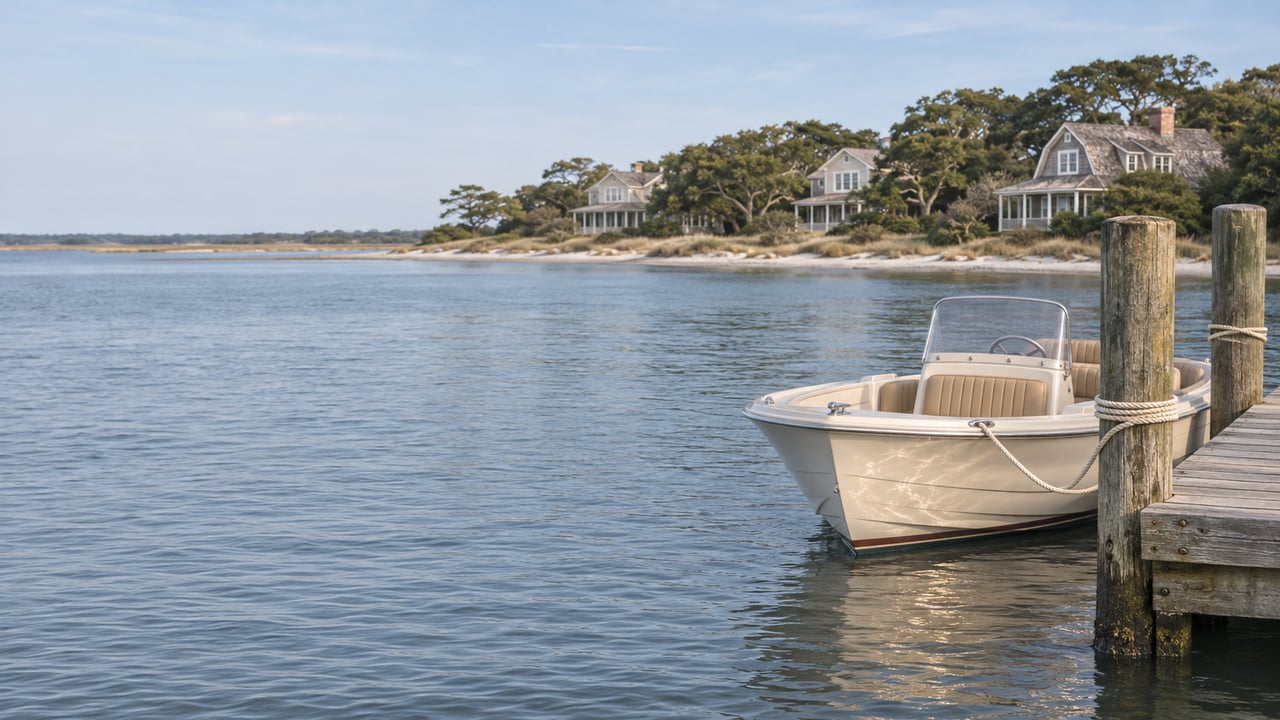
Nothing gets to Bald Head Island by road, because there isn't one. Bald Head Island is a barrier island roughly three miles across the Cape Fear River from Southport, North Carolina, with no bridge to the mainland. People and light baggage travel by passenger ferry. Everything else, cargo, equipment, and vehicles, travels by barge, and the barge runs on its own schedule with its own lead times.
That schedule matters more during a transaction than most out-of-town buyers expect. Bald Head Island Limited's barge carries cargo, vehicles, supplies, and equipment to the island, departing from Deep Point Marina. Reservations should be made at least two weeks in advance, especially for a same-day return, and the barge typically runs Monday through Friday with the last departure off the island at 3:00 p.m. Miss it, and the equipment, or the contractor's truck, stays overnight, because there's no way back until the next scheduled run.
Furniture follows the same rule. It can't ride the passenger ferry with your luggage. Furniture must be transported via the barge, and special arrangements have to be made in advance. If a seller is negotiating repairs during due diligence, or a buyer is planning to move in furnished, that repair crew and that moving truck are both working against a barge calendar that runs on banker's hours, five days a week, with a two-week reservation buffer baked in before anyone even starts the work.
Vehicles add another layer. The Village of Bald Head Island says that any gas-powered equipment coming to the island needs a permit before it can touch a Village road, and bringing an internal combustion engine vehicle requires an ICE permit, with restrictions on hours of operation, vehicle size, and certain areas of the island. That permit isn't a formality you can skip. Contractors who miss their return trip have to work out their ICE permit and ferry arrangements accordingly, because the Bald Head Island Association says no ICE vehicle can be parked at a residence overnight.
Even members of the Bald Head Island Club, who have an alternative path for large moves through the Club's warehouse, arranged by phone, and limited to Club members only, still face a delivery model built for a low-traffic island rather than a mainland move. Delivery on Bald Head Island stops at the curb, not inside the home, so the last leg is on the buyer or their contractor to arrange.
If you're assuming the ferry timetable is a stable variable in your planning, it's worth knowing that it has changed recently, and not quietly. In early 2024, the ferry operator, Bald Head Island Transportation, proposed stretching the crossing from 30-minute to 45-minute intervals to improve on-time performance. Over 120 letters were submitted by island homeowners to the North Carolina Utilities Commission, almost all opposing the change, and the Village itself also intervened in the proceeding.
The result was a compromise, not a rejection. By that October, the parties settled on a hybrid schedule that the Utilities Commission approved.
"On behalf of the intervenors in this proceeding, we are pleased with the Commission's order," said Bald Head Island Mayor Peter Quinn in a joint statement announcing the settlement.
The revised schedule kept 30-minute runs in the early morning and evening while stretching other hours, eliminated the ferry's former midday lunch break, and set up a one-year trial period with regular performance reviews between the Village, the ferry operator, and other island stakeholders. It also created a dedicated reservation system for contractors and employees on the contractor ferry, meant to launch by early 2025. The upshot for anyone under contract now is simple: the transportation infrastructure a closing depends on has been renegotiated once in the last two years and is still subject to periodic review, which is one more reason to confirm current logistics rather than assume last season's timetable still holds.
Picture a fourteen-day due diligence period, which is a common length on the mainland. The buyer orders an inspection on day three. The inspector can walk on as a passenger, no barge required, so that part moves at mainland speed. The inspection turns up a repair the seller agrees to handle, roof flashing, a deck rail, something that needs a contractor and materials.
Now the second clock starts. The contractor needs a barge slot for tools and materials, ideally booked two weeks out. The barge only runs weekdays, with a 3:00 p.m. cutoff. If the repair gets negotiated on day ten of a fourteen-day period, there may not be enough runway left in the due diligence window, let alone before settlement, for materials to physically reach the island. The North Carolina Real Estate Commission says the seller must complete agreed repairs in a workmanlike manner before settlement. That obligation doesn't move. The barge schedule doesn't care that it doesn't move.
The final walk-through carries its own version of this problem. The buyer has the right to verify repairs and do a final walk-through, during or after the due diligence period, but getting to the island to do it means a tram and ferry reservation, and seats tighten considerably during the summer season. A walk-through scheduled the day before settlement isn't a phone call away from being confirmed. It's a reservation that needs to exist before that day arrives.
| Task | What the contract requires | What the island requires |
|---|---|---|
| Due diligence period | Negotiated window, commonly two to four weeks | Inspections and visits may require ferry and tram planning |
| Home inspection | Completed within the due diligence window | Inspector travels as a ferry passenger; ticket and tram booking needed |
| Contractor-performed repair | Completed in workmanlike manner before settlement | Barge slot, roughly two weeks' lead time, weekday-only service; Village permit for gas-powered equipment, ICE permit for an ICE vehicle |
| Move-in furniture | No contract deadline, but affects move planning | Must go by barge, not ferry; arranged separately from passenger travel |
| Final walk-through | Buyer's right before or after due diligence ends | Requires ferry and tram reservation, limited seats in peak season |
If you're a buyer weighing how long a due diligence period to request, the honest answer is that it should be driven less by how fast a mainland lender can turn an appraisal and more by whether the property is likely to need contractor work before closing. A shorter period might look competitive on paper, but if it doesn't leave room for a barge reservation, it can force an uncomfortable choice between waiving a repair request or asking for a credit instead of the work itself.
If you're a seller agreeing to repairs, the same logic runs in reverse. Committing to finish work "before settlement" is a real obligation, and on Bald Head Island, that commitment is only as good as the barge slot behind it. Booking that reservation the day the repair is agreed to, rather than the week before closing, is the difference between meeting the obligation and explaining a delay.
A few practical habits make both sides less exposed:
Does the due diligence fee cover any barge or ferry costs? No. The due diligence fee is a payment from buyer to seller for the right to investigate the property, unrelated to transportation logistics. Barge reservations, ICE permits, and ferry tickets are billed separately by their respective operators.
Do I need to be physically on the island to close? What does require physical presence, or a trusted representative's, is the inspection, any repair verification, and the final walk-through, all of which need their own ferry and tram planning.
What happens if the barge can't run because of weather? The barge schedule is explicitly weather-dependent. If a contractor gets stuck on the island because a scheduled run doesn't go out, the standard guidance is to contact the barge office or the dockmaster to arrange the next available crossing, which can push a repair timeline by a day or more.
Do golf carts factor into closing at all? Cars aren't permitted on Bald Head Island. New owners typically register a golf cart with the Village after closing, and any gas-powered vehicle needed temporarily for moving or construction requires its own ICE permit, separate from cart registration.
Buying on Bald Head Island rewards the buyer who plans the boat schedule with the same care as the loan contingency. If you're weighing an offer, comparing due diligence timelines, or trying to figure out whether a repair request is realistic before your settlement date, Barbara Adams can walk you through both clocks before you sign anything. Schedule a confidential consultation to talk through your specific timeline.
This article is general information, not legal, tax or financial advice. Consult a qualified professional about your situation.
I am committed to guiding you every step of the way—whether you're buying a home, selling a property, or securing a mortgage. Whatever your needs, I've got you covered.