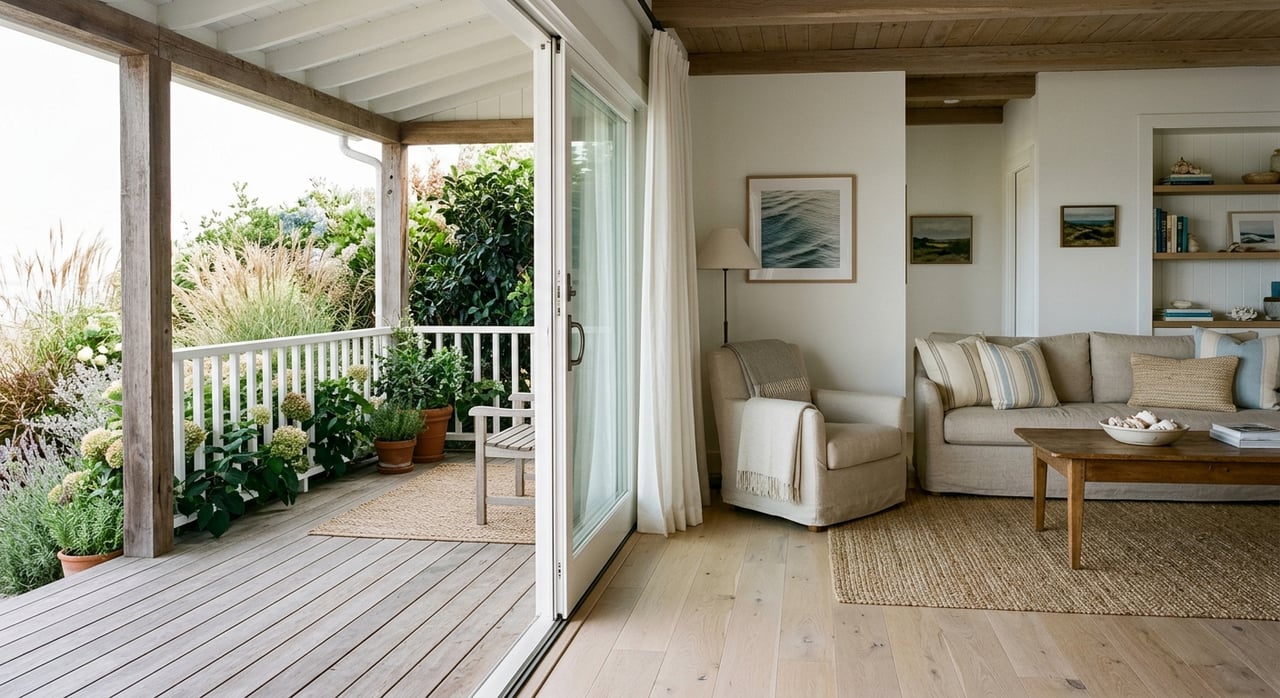
Guide to Bald Head Island Rental Homes and Investments
April 23, 2026
April 23, 2026
Trying to decide whether a Bald Head Island home should be your personal retreat or a rental property? That choice matters more here than it does in many beach markets. On Bald Head Island, ownership comes with unique logistics, local tax rules, and coastal risk factors that can change your costs, your time commitment, and your day-to-day experience. If you are weighing lifestyle against income potential, this guide will help you think through the tradeoffs clearly. Let’s dive in.
Bald Head Island is not a typical drive-up beach community. According to the Village of Bald Head Island, there is no bridge to the island, most visitors arrive by passenger ferry from Deep Point Marina, and passenger cars are not allowed on the island.
That changes the ownership equation right away. You need to think about ferry schedules, mainland parking, luggage handling, and how you will get around once you arrive. For many owners, that means planning around golf carts, bicycles, and trams rather than simply pulling into a driveway.
The Village also requires golf cart and electric vehicle registration. On top of that, the island faces real coastal conditions, including hurricanes, dune erosion, high-tide flooding, and sea-level rise, all of which the Village highlights on its flood-protection resources.
If your main goal is personal enjoyment, a pure second home is often the simpler path. You can focus on using the property when you want it, without turning the home into an active rental operation.
That simplicity matters on Bald Head Island. If you do not rent the home, you avoid the Village’s short-term rental reporting process, accommodation-tax remittance workflow, and sales-tax registration tied to rental income. The Village’s short-term rental tax guidance makes clear that those requirements apply when a property is used as a rental business.
A second home still requires care. The Bald Head Association community-wide standards say properties must be kept in a clean, neat, sightly, and attractive condition, with regular maintenance and trash removal expected.
In other words, a non-rental home is not a hands-off asset. But it usually involves less guest turnover, fewer scheduling pressures, and less coordination with outside vendors.
A second home may be the better fit if you want to:
If your goal is to help offset carrying costs, a rental property can be appealing. But on Bald Head Island, a short-term rental is more than extra income. It operates more like a lodging business.
The Village defines a short-term rental as accommodations rented for less than 90 days to the same person. It also states that monthly tax reports are due and that the homeowner remains responsible for proper tax remittance, even if a platform or rental agent collects payment. The Village is explicit that renting a property is considered a business enterprise.
That means more moving parts. You may need help with bookings, cleaning, inspections, maintenance, and turnover coordination. The Bald Head Association property management directory shows that the island does have a strong support network for vacation-rental management, home maintenance, and cleaning services, which can be helpful if you do not want to manage everything yourself.
A rental property may make more sense if you are comfortable with:
Before you choose a rental strategy, it helps to understand the tax stack. Accommodation rentals in North Carolina are subject to state and applicable local sales taxes, and the North Carolina Department of Revenue says Brunswick County currently has a 6.75% sales-and-use tax rate.
On top of that, the Village collects a 6% occupancy tax, and Brunswick County separately imposes a 1% room occupancy tax countywide. Those percentages can materially affect your rental math, so they should be part of your planning from the start.
Property taxes also matter whether you rent or not. According to Brunswick County’s current tax rates, the county rate is 0.3420 and the Bald Head Island municipal rate is 0.6507 per $100 of assessed value, for a combined 0.9927 per $100 before any additional MSD charges that may apply in some shoreline areas.
If you plan to use the home personally and rent it some of the time, federal tax treatment can get more nuanced. The IRS explains in Topic 415 and Publication 527 that vacation homes with both personal and rental use follow special day-count rules, and a home rented fewer than 15 days in a year may receive special treatment in the right circumstances.
Because those rules depend on how you use the property, a hybrid strategy should be planned carefully. If your ownership goals include both personal enjoyment and rental income, individualized tax guidance is a smart step.
Not every property should be assumed rentable just because it is on the island. Local covenants and association rules matter.
The Bald Head Association member resources note that the Association enforces multiple sets of secondary covenants on the East End and states that properties are to remain residential in character. Its guidance also says vacation or recreational rentals are acceptable, while other commercial uses are not.
That is an important distinction. Before you buy, verify the specific deed restrictions, covenant set, and HOA rules for the exact property address. A home that works well as a personal second home may not line up the same way with your rental plans unless those details are confirmed first.
Every coastal property comes with some environmental risk, but on Bald Head Island those issues should be part of the decision from the beginning. The Village states that standard homeowners insurance does not cover flooding and notes that NFIP flood insurance is available for structures and contents.
The same Village guidance points to hurricane exposure, flooding, wave action, dune erosion, high-tide flooding, and sea-level rise as ongoing realities. Whether you plan to use the home yourself or rent it, storm readiness and evacuation planning are part of ownership.
For rental owners, those risks can have an added business effect. Weather events may interrupt bookings, delay repairs, or increase operating complexity during peak seasons.
| Decision Factor | Second Home | Rental Property |
|---|---|---|
| Primary goal | Personal use and enjoyment | Income generation and cost offset |
| Compliance workload | Lower | Higher |
| Guest turnover | Minimal | Ongoing |
| Tax reporting | Simpler | Monthly local reporting required |
| Scheduling flexibility | High for owner use | Limited by bookings |
| Management needs | Regular upkeep | Upkeep plus active coordination |
| Logistics burden | Moderate | Higher |
The right choice often comes down to how you want to use the property and how much complexity you are willing to manage. These are some of the most useful due-diligence questions for Bald Head Island buyers:
If your priority is a dependable personal retreat, the second-home model often feels cleaner and easier to manage. If your priority is income and you are ready for the responsibilities that come with it, a rental may be the better match.
On Bald Head Island, the difference between a second home and a rental property is not just about income. It affects your tax obligations, your management workload, your travel logistics, and your risk planning.
That is why this decision works best when you step back and define your real goal first. Do you want a peaceful place to use on your own terms, or are you prepared to run the home more like a business? Once you answer that clearly, the right path usually becomes much easier to see.
If you want a thoughtful, numbers-aware conversation about how to evaluate a property decision with clarity and confidence, Barbara Adams is here to help.
I am committed to guiding you every step of the way—whether you're buying a home, selling a property, or securing a mortgage. Whatever your needs, I've got you covered.